Evidence-informed strategies and interventions designed to reduce the likelihood of substance use and related harms. Prevention efforts aim to reduce risk factors and strengthen protective factors at the individual, family, community, and societal levels. These approaches may include education, family and school-based programmes, community initiatives, and policies that promote healthy environments. Prevention can be universal (targeting entire populations), selective (targeting groups at higher risk), or indicated (targeting individuals already showing early signs of risk). By addressing the factors that influence substance use before problems develop or escalate, prevention plays a key role in comprehensive responses to substance use disorders and related social and health challenges.
Prevention
Policies, delivery models, and lessons learned from integrating mental health and substance abuse services into primary health care in Ethiopia.
In Ethiopia, noncommunicable diseases (NCDs) represent 18.3% of premature mortality, consume 23% of the household expenditures, and cost 1.8% of the gross domestic product. Risk factors such as alcohol, khat, and cannabis use are on the...
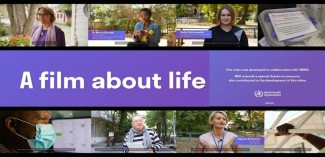
Drug overdose: a film about life
This is a film about hope and life, it is about people who are making a difference.
President Biden issues proclamation for overdose awareness week
President Biden issued the first ever Presidential Proclamation recognizing August 29, 2021 – September 4, 2021 as Overdose Awareness Week – a time to honor the lives lost to the overdose epidemic and recommit to both preventing overdoses...
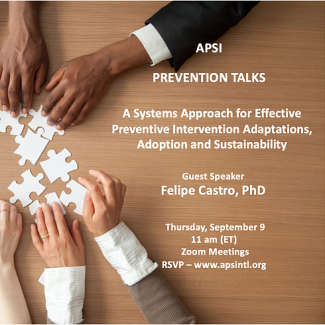
Monitoring and evaluation for community based prevention systems
Monitoring and evaluation (M&E) are essential in strengthening Community-Based Prevention Implementation Systems, through this process organizations collect and analyze data, and determine if the Substance use prevention- intervention (EBIs...
Overdose recognition and management: Reading list
According to the World Health Organisation, around half a million deaths each year are attributable to drug use. More than 70% of these deaths are related to opioids, with more than 30% of those deaths caused by overdose. Signs, symptoms...
Periods of altered risk for non-fatal drug overdose
The risk of an individual overdosing is influenced by a range of, often overlapping circumstances. Factors such as incarceration, mental and physical health conditions, and the treatments prescribed for these conditions can all affect the...
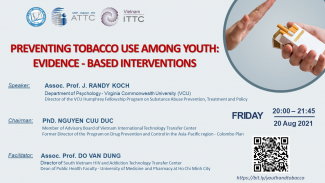
Preventing Tobacco Use Among Youth: Evidence-Based Interventions
The global data indicates that the age of starting tobacco usage is decreasing rapidly. This not only has been causing many serious health consequences but is also increasing a lot of social issues. On the other hand, early use shows a high risk of leading to the use of other substances such as heroin in adulthood. Therefore, prevention and early intervention in this population are very crucial. In order to contribute to promoting the youth tobacco use prevention program in the near future in Vietnam, VHATTC organizes an online session on "Preventing Tobacco Use Among Youth: Evidence-Based Interventions".
Effects of minimum unit pricing for alcohol in South Africa
Minimum Unit Pricing (MUP) for alcohol is a policy whereby a set price is introduced, below which a fixed volume of alcohol cannot be sold to the public. Several countries, including Scotland, Canada, certain states of the USA, Russia...
WHO-UNODC “Stop Overdose Safely (S-O-S)” initiative
Overdose is the leading cause of avoidable death among people who inject drugs. The ‘Stop Overdose Safely’ is a joint initiative from UNODC and the World Health Organization (WHO) to address opioid overdose and provide life-saving...
Opioid overdose information page
Worldwide, about 500 000 deaths are attributable to drug use. More than 70% of these deaths are related to opioids, with more than 30% of those deaths caused by overdose. This information page, put together by the World Health Organisation...