
The range of medical, psychological, and social services designed to help individuals reduce or stop substance use and manage substance use disorders. Treatment may include assessment, counselling and behavioural therapies, medication-assisted treatment, withdrawal management, and support for co-occurring mental or physical health conditions. Effective treatment is typically person-centred and evidence-informed, and may be provided in outpatient, community, or residential settings. Treatment aims to improve health and functioning, reduce substance-related harms, and support individuals in moving toward recovery and long-term wellbeing.
Treatment
Buprenorphine versus methadone for the treatment of opioid dependence: a systematic review and meta-analysis of randomised and observational studies
Opioid dependence is associated with substantial health and social burdens, and opioid agonist treatment (OAT) is highly effective in improving multiple outcomes for people who receive this treatment. Methadone and buprenorphine are common...
Comparison of Treatments for Cocaine Use Disorder Among Adults
Key Points Question What treatments for cocaine use disorder are associated with objective reductions in cocaine use among adults? Findings In this meta-analysis of 157 clinical trials comprising 402 treatment groups and 15 842 participants...
Cocaine Reading List
Cocaine is an addictive stimulant drug that originates from the leaves of the coca plant, which is indigenous to South America. The drug's effects include heightened alertness, attention, and energy, as well as feelings of euphoria and...
Responding to stimulant use — developments in treatment
Objective: To better understand current developments in the treatment of stimulant use. Background: Stimulant drugs are second only to cannabis as the most widely used class of illicit drug globally, accounting for 68 million past-year...
Exploring treatment barriers on the use of crystal methamphetamine among young people in Zimbabwe
Substance misuse among young people is one of the most public concerns in global health. This study set out to explore treatment barriers among young people in Zimbabwe. Data was collected through interviews with 30 participants The study...
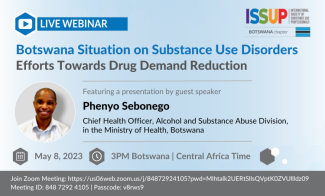
Botswana Situation on Substance Use Disorders: Efforts Towards Drug Demand Reduction
Join us on May 8, 2023 for an online event celebrating our first official year since launching ISSUP Botswana National Chapter on 29th April 2022.
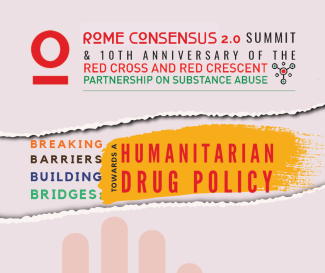
Rome Consensus 2.0 Summit
Join the upcoming Rome Consensus 2.0 Summit taking place from 2-5 May, 2023. The Summit is a unique opportunity to gather and engage in discussions with leading experts, professionals, activists, and Red Cross and Red Crescent leaders in a participatory meeting designed based on participants' national and international experiences.
Improving alcohol management in primary health care in Mexico
Abstract Introduction Alcohol screening, brief advice and referral to treatment (SBIRT) in primary health care is an effective strategy to decrease alcohol consumption at population level. However, there is relatively scarce evidence...
I had nothing, and drugs don’t leave”: Young offenders’ perspectives on Alcohol and Other Drugs (AoD)
This webinar looked at the contexts of young offenders’ alcohol and other drug use and the implications for harm reduction strategies. The importance of multi-level interventions that move beyond ‘victim blaming’ and ‘individual...
Cognitive-behavioral therapies in Mexico
The book that the reader has in his hands aims to reflect the origin, background and current status worldwide and in Mexico of cognitive-behavioral therapies, as well as the different areas at its disposal, of which we only present a few...